
🪄 AI Summary
Heading 1
Heading 2
Heading 3
Heading 4
Heading 5
Heading 6
Lorem ipsum dolor sit amet, consectetur adipiscing elit, sed do eiusmod tempor incididunt ut labore et dolore magna aliqua. Ut enim ad minim veniam, quis nostrud exercitation ullamco laboris nisi ut aliquip ex ea commodo consequat. Duis aute irure dolor in reprehenderit in voluptate velit esse cillum dolore eu fugiat nulla pariatur.
Block quote
Ordered list
- Item 1
- Item 2
- Item 3
Unordered list
- Item A
- Item B
- Item C
Bold text
Emphasis
Superscript
Subscript
Many growing SaaS and technology firms sit on hours of valuable executive interviews, webinars, and product recordings. The problem is not a lack of footage. The problem is turning that footage into platform-ready assets that actually drive pipelines. If you are looking for the best video editing companies Boston has available, standard cut-and-splice vendors will not solve your distribution problem. I have seen too many B2B teams waste budget on polished videos that never reach their buyers. Here is how to find a partner that builds a reliable content engine.
Comparing 10 Best Video Editing Companies in Boston
When comparing the best video editing companies Boston offers, you must look at their delivery model. Some provide dedicated editors, while others provide a full production system.
10 Best Video Editing Companies in Boston, MA in 2026
Here is a detailed look at the best video editing companies Boston teams rely on. The right choice depends entirely on whether you need a film crew, a subscription-based editor, or a recurring content system that handles both production from scratch and repurposing.
1. Komet Media
We built Komet Media to be a comprehensive video partner. While we are known for solving the problem of unused webinars and podcasts through repurposing, we also offer full-scale video production from scratch to ensure brands have high-quality original masters to distribute.
We work primarily with B2B SaaS and AI/tech founders, venture capital firms, and private equity leaders. Our services cover the entire lifecycle: we produce original video content from scratch and then execute deep content repurposing. We take your new or long-form recordings and turn them into short clips, YouTube Shorts, LinkedIn videos, and Instagram Reels. Editing creates the asset, but distribution gives the asset a chance to produce business value. We manage both.
Our delivery model relies on mid-tier retainers or recurring projects, usually ranging from $2,500 to $5,000 depending on the volume of content and distribution support required. We are not a low-cost marketplace. We are a production partner for teams that need a reliable publishing system.
2. Skillman Video Group
Skillman Video Group is a local Boston agency focused on traditional corporate video production. They are a strong option if your business requires a physical film crew to come to your office in Massachusetts.
They handle corporate overviews, live event filming, and training videos. Their delivery model is strictly project-based. You hire them to plan a shoot, capture the footage, and deliver the final cut. This approach works well for a company homepage video or a major annual conference.
However, they do not specialise in recurring short-form video or daily social media distribution. If you need a partner to handle your weekly podcast repurposing, a retainer-based agency will be a better fit.
3. Vidico
Vidico focuses heavily on brand videos, explainer videos, and high-end product launches. They are highly capable when it comes to animated software demos and live-action commercial campaigns.
If your B2B SaaS company is preparing for a Series B funding announcement and needs one exceptional hero video, Vidico is a strong candidate. They manage the entire creative process from storyboarding to final delivery.
Because they focus on premium project work, they are less suited for teams that just want to extract daily clips from their executive zoom calls. Their pricing matches their high production value, making them best for major quarterly or annual marketing events.
4. Spoke
Spoke takes a different approach to video editing. They focus specifically on repurposing recordings into marketing assets. They use a workspace model that helps marketing teams turn webinars and virtual events into usable clips.
Their service is highly relevant for lean demand generation teams that host a lot of live online events. They help bridge the gap between a one-hour recording and the short assets needed for follow-up emails and social media posts.
Their model requires your internal team to manage the strategy and distribution. They provide the edited files, but your marketing manager will still need to plan the calendar, write the copy, and track the performance.
5. Sound and Vision Media
Based just outside of Boston, Sound and Vision Media is a veteran in the local commercial production space. They have their own studio facilities and offer full-service video and audio production.
They are an excellent fit for traditional businesses that need television commercials, radio spots, or highly polished corporate documentaries. They bring decades of physical production experience to the table.
Like most traditional production houses, their model is built around large, distinct projects rather than agile, recurring social media publishing. B2B software companies seeking rapid iterations for LinkedIn will likely find this model too slow for their daily needs.
6. ShortVids
ShortVids provides monthly short-video editing on a subscription basis. Their service is built for volume, catering to creators and businesses that need a high frequency of TikToks, Reels, and Shorts.
Their model is straightforward. You send them raw footage, and they return edited short clips with captions. This is a highly efficient solution if you already have a strong internal content strategist who knows exactly what clips to select.
The limitation is strategy. Subscription models at this level edit exactly what you send them. If you send a weak hook, they will edit a weak hook. They do not typically advise on B2B buyer journeys or pipeline impact.
7. TastyEdits
TastyEdits operates a productised subscription service for video editing. They handle both long-form YouTube videos and short-form clips, making them a flexible option for marketing teams with varied asset needs.
They provide a structured dashboard where you can submit briefs, upload footage, and request revisions. This systematic approach appeals to operations-minded marketing leaders who want a clear, predictable workflow.
Like ShortVids, TastyEdits requires you to drive the creative vision. You must provide the master files and clear instructions. They execute the technical edit efficiently, but they are not a strategic B2B distribution agency.
8. Vidpros
Vidpros uses a fractional dedicated editor model. Instead of paying per video, you subscribe to a set number of editing hours per day from a dedicated professional.
This model is excellent for a B2B media team that produces a high volume of varied content. Having the same editor every day ensures consistency in your brand guidelines and pacing. It functions almost exactly like hiring an in-house junior editor, without the payroll complications.
The drawback is that you are buying hands, not a system. If your podcast is failing to reach your target buyers, a dedicated editor will not solve the underlying distribution problem. You must still manage the strategy internally.
9. Motionvillee
Motionvillee specialises in motion graphics, 2D animation, and SaaS explainer videos. They are a strong choice when you need to explain complex technical products without using a camera.
For early-stage technology startups, an animated explainer is often the best way to demonstrate a platform that is still in development. Motionvillee handles scriptwriting, voiceover, and animation design.
Their work is project-based. Once the explainer video is delivered, the engagement usually ends. If you are looking for a partner to manage an ongoing founder-led video series, you will need to look toward an agency focused on recurring video services.
10. Lemonlight
Lemonlight is a massive national video production company with the ability to shoot almost anywhere in the United States, including Boston. They focus heavily on high-end commercial production and performance advertising videos.
They are an excellent choice for a well-funded enterprise that needs a slick, broadcast-quality campaign. They bring professional crews, actors, and lighting to deliver a polished final product.
Because of their scale and project focus, they are not the right fit for an executive looking to quickly test unpolished, thought-leadership content on LinkedIn. Their minimum engagements are substantial, reflecting their premium capabilities.
How Do Top Video Editing Companies Approach Content Workflows?
Standard video editing is a technical task. Content production is a business system. The workflow used by the best video editing companies Boston provides will look something like this.
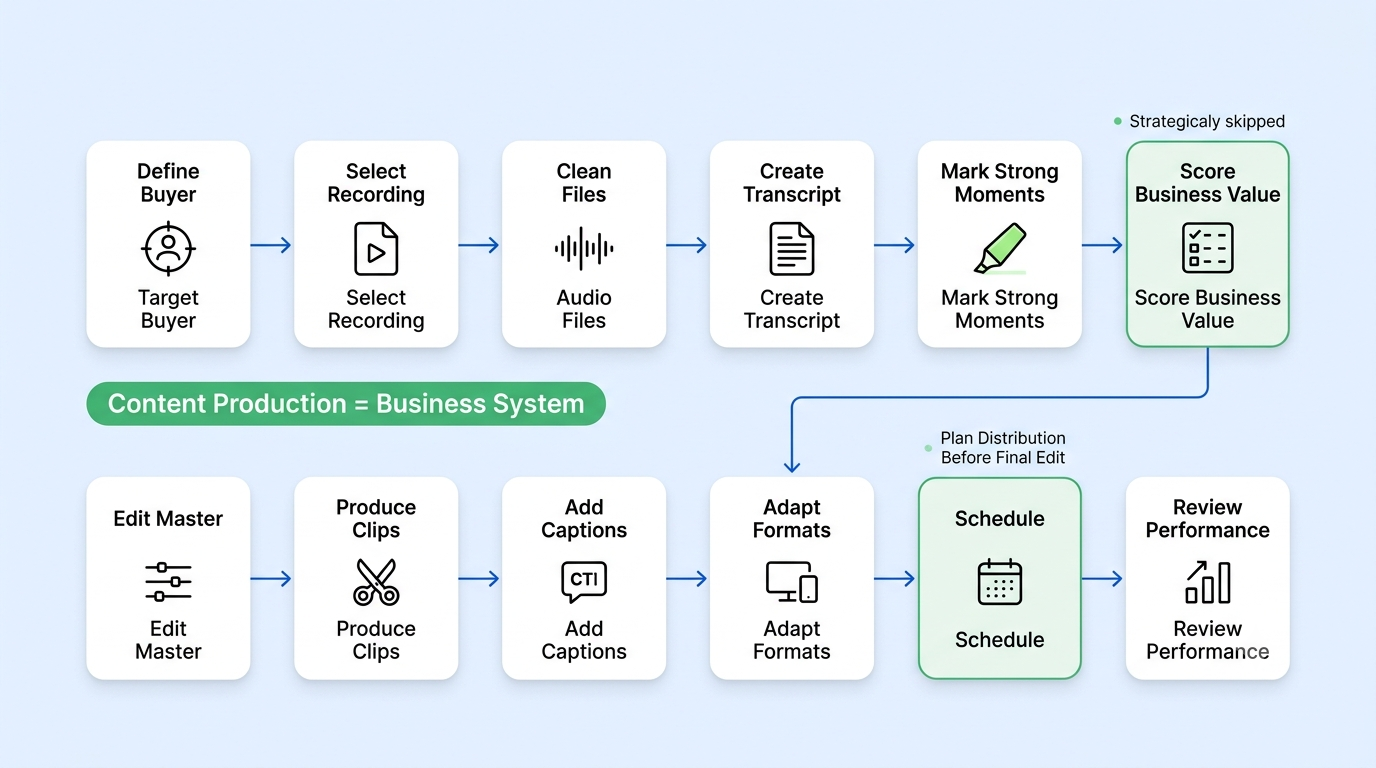
First, the team must define the buyer and the business goal. A video meant to source venture capital deals looks very different from a video meant to explain a software feature.
Second, the team selects the master recording. I usually look at the distribution plan before deciding how the master recording should be edited. We prefer to plan the short clips before the long episode reaches final approval.
From there, a reliable workflow follows these steps:
- Prepare clean audio and video files.
- Create an accurate transcript.
- Mark strong moments based on clear arguments and buyer objections.
- Score those moments by clarity and business value.
- Edit the master asset.
- Produce short clips from the scored moments.
- Add brand-aligned captions and supporting visuals.
- Adapt exports for specific platforms.
- Run quality checks against the original brief.
- Approve the final assets.
- Schedule distribution.
- Review performance and feed lessons into the next recording.
Small teams do not need to execute all twelve steps perfectly on day one. However, skipping the scoring and distribution steps usually results in content that looks nice but produces no leads.
Data supports this need for strategy. According to 2026 research from the Content Marketing Institute, B2B buyers consume several pieces of content before they ever reach out to a sales team. Your video workflow must support this journey consistently.
How Is Pricing Structured for Boston Video Editing Services?
How the best video editing companies Boston houses handle pricing depends entirely on their business model.
Freelancers generally charge an hourly rate or a flat day rate. This is useful for occasional work, but it rarely scales into a dependable publishing system.
Subscription models, like those offered by TastyEdits or Vidpros, charge a flat monthly fee for a capped amount of editing time or a limited number of active requests. These models are cost-effective but require you to manage the strategy.
Retainers and recurring projects provide the highest value for business leaders. At Komet Media, our typical engagements range from approximately $2,500 to $5,000. This pricing reflects a comprehensive service. It includes editing the master podcast, scoring the transcript, pulling the strongest clips, designing the thumbnails, and supporting the final distribution.
When evaluating a proposal, check what the price actually covers. Does it include revision rounds? Does it include platform adaptations? Does it include distribution strategy? If a price seems unusually low, it is usually because the vendor is only providing raw technical editing.
If you want to read more about specific service costs, you can review our thoughts on how to choose a video editing agency for B2B.
How Can I Measure the Commercial Impact of Video Content?
What the best video editing companies Boston features will track goes beyond basic view counts. You must match your metrics to the specific purpose of the video.
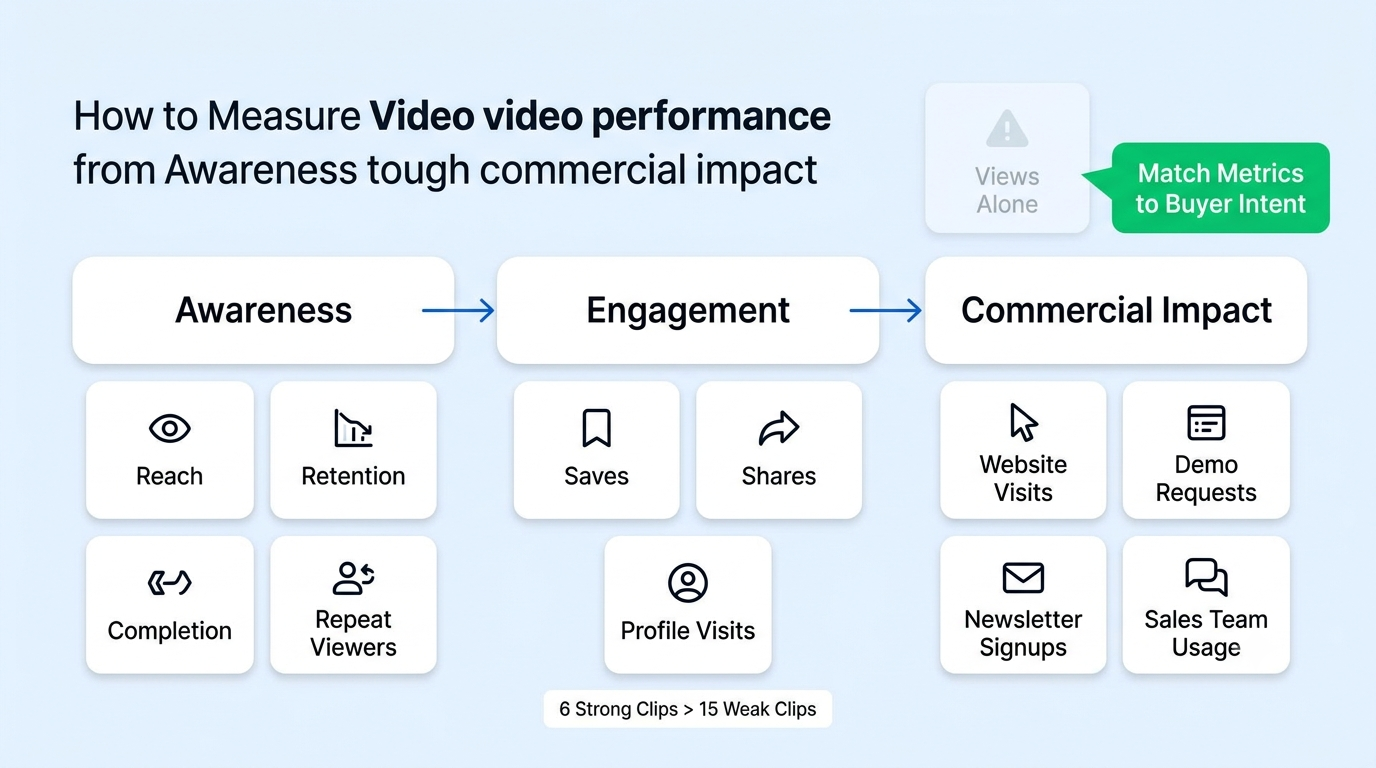
A short clip is not automatically good because it is short. I would rather produce six strong clips that reach the right founders than fifteen weak ones that reach a broad, irrelevant audience.
When measuring awareness, look at reach, viewer retention, and completion rates. For a platform like LinkedIn, we pay close attention to repeat viewers and profile visits.
When measuring engagement, look beyond standard likes. Saves and shares are much stronger indicators that a B2B buyer found your content valuable. According to LinkedIn Business guidelines, content that sparks meaningful conversations drives far more sustained reach than simple passive viewing.
Finally, track commercial metrics. Attribution is often imperfect, but you can track website visits, demo requests, and newsletter signups. More importantly, check if your sales team is actually using the video assets in their active conversations. Content that sales teams never use is a clear signal that your production is disconnected from buyer needs.
If you need a framework for this, we have detailed the video KPIs B2B teams should track extensively.
How Do I Choose the Right Video Editing Partner?
Choosing from the best video editing companies Boston has to offer comes down to understanding your own internal gaps. If you lack camera equipment and need local filming, hire a production crew. If you lack an editor but have a great strategy, buy a subscription. If you need a partner to handle the entire pipeline—from original production from scratch to a reliable distribution engine—partner with an agency like Komet Media that handles the entire workflow.
Focus on finding a partner that understands your business model. You do not have a content shortage. You simply need a reliable way to get your existing expertise in front of the right buyers.
What Are the Frequently Asked Questions About Boston Video Editing Agencies?
1. How much do the best video editing companies Boston agencies charge?
Pricing depends on the service model. Local project-based shoots can cost anywhere from $3,000 to $15,000 depending on crew size. For ongoing B2B services including production from scratch, repurposing, and distribution, retainers typically range from $2,500 to $5,000 per month. Subscription editors often charge between $1,000 and $2,000 monthly for technical execution only.
2. Should we hire an internal editor or an external agency?
Hire an internal editor if you produce high volumes of daily footage and have a senior content strategist to guide their work. Partner with an agency if you want to bypass the hiring process and instantly access a proven workflow for repurposing and distribution without managing a new employee.
3. What is the standard turnaround time for B2B video editing?
Turnaround times vary by scope. A single short-form clip can often be returned in 24 to 48 hours. A full podcast episode with accompanying show notes and multiple short clips usually requires a 5 to 7-day production cycle to ensure proper quality checks and strategic review.
4. Can an agency edit videos we recorded ourselves on Zoom or Riverside?
Yes. In fact, most B2B thought leadership content is currently recorded remotely. A strong agency will take your raw Riverside or Zoom files, clean the audio, grade the video, and frame the subjects professionally before cutting the content for social media.
5. How do we ensure the edited videos sound like our brand?
You ensure brand consistency by providing a clear brief before editing starts. This should include your visual brand guidelines, preferred pacing, and examples of content you admire. We also recommend establishing a clear feedback loop during the first month to calibrate the editing style to your exact preferences.
6. Do these companies help with posting the videos to social media?
Some do, but many do not. Traditional production houses and subscription editors deliver a raw MP4 file and leave the publishing to you. Agencies focused on content operations, like Komet Media, will often write the accompanying post copy and assist directly with scheduling and platform distribution.
7. Does Komet Media work with companies outside of Boston?
Yes. While we manage production for teams in major financial and tech hubs, our main target market is the entire United States. Because our workflow focuses on remote recordings, podcasts, and digital repurposing, we partner seamlessly with businesses regardless of their physical headquarters.
8. How many short clips should we extract from a one-hour podcast?
More clips do not always produce more reach. Strong selection matters more than volume. From a standard one-hour recording, we typically extract between three and six highly focused clips that address specific buyer pain points, rather than forcing fifteen average clips just to fill a calendar.