
🪄 AI Summary
Heading 1
Heading 2
Heading 3
Heading 4
Heading 5
Heading 6
Lorem ipsum dolor sit amet, consectetur adipiscing elit, sed do eiusmod tempor incididunt ut labore et dolore magna aliqua. Ut enim ad minim veniam, quis nostrud exercitation ullamco laboris nisi ut aliquip ex ea commodo consequat. Duis aute irure dolor in reprehenderit in voluptate velit esse cillum dolore eu fugiat nulla pariatur.
Block quote
Ordered list
- Item 1
- Item 2
- Item 3
Unordered list
- Item A
- Item B
- Item C
Bold text
Emphasis
Superscript
Subscript
In 2026, SaaS buyers don’t “research” software the old way.
They skim your website, scroll LinkedIn & YouTube, compare you with 2–3 competitors, and decide faster than ever. Long PDFs, feature-heavy sales decks, and dense landing pages are no longer enough to move people forward.
This shift has changed how SaaS companies need to communicate value.
Video has become the fastest way to explain what a product does, who it’s for, and why it’s worth a buyer’s time, all within minutes instead of pages. More importantly, it helps buyers see themselves using the product before they ever book a demo.
But in 2026, successful SaaS teams aren’t relying on a single “hero video” to do all the work.
They use different video formats for different moments in the buyer journey - from first exposure to evaluation, onboarding, and expansion.
This blog breaks down the 9 most effective video content ideas for SaaS in 2026, along with real examples you can watch and learn from.
Why Video Is Non-Negotiable for SaaS in 2026?
Today’s SaaS buyers are overloaded with options. Most buyers compare multiple tools simultaneously, involve multiple stakeholders and expect clarity before committing to a trial or demo.
More importantly, video reduces perceived risk by showing how your product works, who it works for, whether it fits into their workflow and why it’s safe to choose. In B2B buying, where decisions impact careers, budgets, and teams, seeing real workflows, real customers, and real people behind the product removes uncertainty and builds confidence faster than text ever can.
With video, you can quickly can demonstrate value quickly and move prospects toward free trials and subscriptions with less friction. In fact, 93% of B2B buyers say video builds brand trust, and 91% of consumers feel more confident purchasing after watching a video.
In 2026, a successful SaaS video strategy doesn’t rely on a single asset. It engages prospects across every stage of the funnel. Explainer videos build awareness, product demos deepen consideration, and short demos, feature deep dives, and launch videos double as sales enablement and PR assets.
Already feeling a little overwhelmed? You’re not alone. Producing a consistent stream of high-quality video is challenging, especially when in-house teams are stretched thin.
Hence, we have curated list of 9 amazing SaaS video ideas with real examples:
1. Explainer Video

An explainer video is usually the first meaningful interaction a potential buyer has with your product. In under 90 seconds, it answers three critical questions:
- What does this product do?
- Who is it for?
- Why should I care right now?
In 2026, the best explainer videos are no longer flashy animations or feature dumps. They are clarity-driven, problem-first stories designed to help buyers self-qualify quickly.
Example: Zendesk Explainer: “WTF is Zendesk?”
Zendesk is a leading customer support and experience SaaS platform used by businesses to manage customer conversations across email, chat, and help desks.
What’s Unique About This Explainer Video
Unlike traditional corporate explainers that start with the product, Zendesk’s “WTF is Zendesk?” flips the script. From the very title and first few seconds, the video addresses the real question users have - “What even is this product?” This breaks the noise and grabs attention immediately.
The video uses informal language and humor to demystify something that can feel abstract. Instead of a dense feature list, it chooses relatability. That makes it more memorable and shareable compared to typical SaaS explainers.
What Your SaaS Can Learn from Zendesk?
1/ Start where buyers are confused, not where you want to sell.
Zendesk opens with the exact question prospects already have. That’s why people keep watching.
2/ Personality builds trust faster than polish.
A little humor + clear thinking makes complex software feel approachable.
3/ Value first, features later.
Show the problem and the outcome before you show the product. Context earns attention.
4/ Speak like a human, not a product manual.
Simple language beats industry jargon every time, especially in the first 30 seconds.
In 2026, the best SaaS explainer videos don’t try to impress. They try to clarify. When you start with the buyer’s real question, explain the problem in human language, and show value before features, your explainer stops being a “brand video” and becomes a fast track for buyers to understand and choose your product.
To help you structure your own SaaS explainer video effectively, you can also explore these 4 script frameworks and templates now!
2. Onboarding Video

An onboarding video is the first real product experience a user has after signing up. The purpose isn’t to explain everything. Its purpose is to help the user get their first win as fast as possible.
A strong onboarding video answers three questions:
What should I do first?
How do I do it correctly?
What result should I expect if I do this right?
In 2026, the best onboarding videos are not long product tours or feature walkthroughs. They are task-focused, outcome-driven videos that guide users step by step using real product screens. They remove confusion, reduce drop-offs, and shorten time-to-value.
Example: Ahrefs - Site Audit Onboarding Tutorial
Ahrefs is a leading SEO SaaS platform used by marketers and growth teams for site audits, keyword research, backlink analysis, and competitive insights.
What’s Unique About This Onboarding Video
Ahrefs doesn’t treat onboarding like marketing. The video jumps straight into the product and shows exactly how to complete one critical task: setting up a Site Audit. There’s no storytelling, no hype, and no unnecessary context.
Just Real UI, Clear steps and A single outcome
Instead of trying to teach everything Ahrefs can do, the video focuses on one high-impact action that delivers immediate value to new users. That’s why it works.
What Your SaaS Can Learn from Ahrefs?
1/ Onboarding should lead to a first win, not full understanding
Ahrefs doesn’t explain the entire platform. It helps users complete one important task successfully.
2/ Real screen sharing build confidence faster than explanations
Showing exactly where to click removes anxiety and guesswork.
3/ One video = one outcome
Trying to onboard users with a single video that has “everything” usually overwhelms them. Task-based videos with one outcome perform better.
4/ Skip marketing language entirely
Onboarding is about execution, not persuasion. Clear instructions beat clever copy.
In 2026, great onboarding videos don’t sell the product. They help users succeed quickly. And when users win early, retention follows.
3. Conference Video
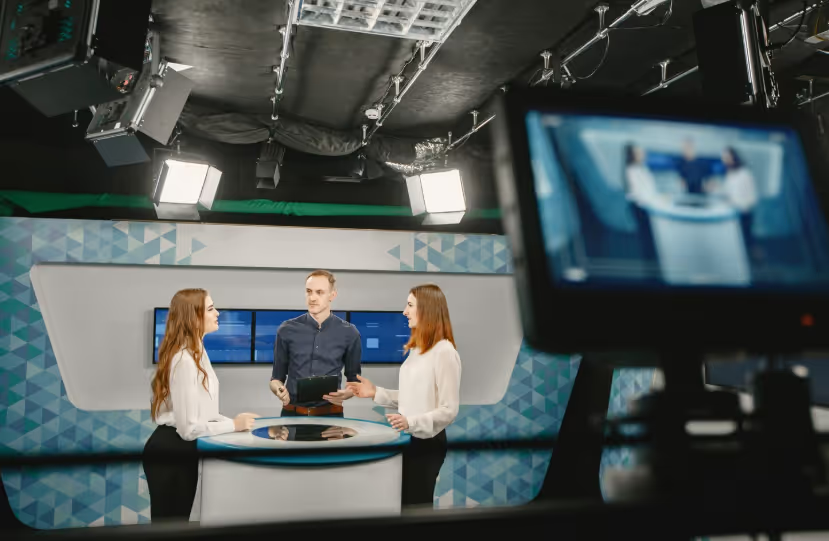
A conference video captures the energy, insights, and highlights of your SaaS events for audiences who couldn’t attend in person.Its job is to bring the key moments to life and make viewers feel the impact of your event.
A strong conference video answers three questions:
- What were the most important announcements or sessions?
- Who were the key speakers or influencers?
- Why does this event matter to me or my team?
In 2026, the best conference videos are story-driven, highlight-focused, and shareable. They combine real footage, speaker soundbites, and on-screen visuals to deliver the essence of the event in a short, engaging format. Conference videos extend your event’s reach, strengthen brand authority, and provide content you can repurpose across social media, email campaigns, and landing pages.
Example: Snowflake Summit 2025 - Conference Highlights
Snowflake is a leading cloud data platform that enables organizations to unify data, perform analytics, and share insights across their enterprise. Their summit gathers customers, partners, and thought leaders to showcase innovation, product launches, and real-world applications.
What’s Unique About This Conference Videos
Snowflake’s highlight reel doesn’t attempt to show everything that happened.
It focuses on:
- Key announcements and product innovations
- Speaker highlights and customer success stories
- High-energy moments that communicate excitement and scale
The video uses dynamic edits, on-screen graphics, and real event footage, making it easy for viewers to quickly grasp the summit’s value without attending.
What Your SaaS Can Learn from Snowflake
1/ Highlight the moments that matter most
You don’t need to capture every session. Pick the content that demonstrates value, innovation, and impact.
2/ Show real people, real excitement
Attendees, speakers, and customers make your product feel tangible. Energy and authenticity matter more than scripted narration.
3/ Make it short, scannable, and shareable
Even 2–3 minutes of high-impact highlights can outperform a full 90-minute session recording.
4/ Repurpose for multiple channels
A conference highlight video isn’t just for YouTube. Share clips on LinkedIn, email campaigns, and social media to extend reach and lead generation.
4. Testimonial Video
A testimonial video is the voice of your happy customers, showing prospects the real-world impact of your SaaS. The goal iis to build trust quickly by showing how your product solved a real problem for a real user.
A strong testimonial video answers three questions:
- Who used the product?
- What problem did they face?
- What measurable outcome did they achieve?
In 2026, the best SaaS testimonial videos are short, authentic, and outcome-driven. They focus on one story at a time, use real customers, and highlight tangible results.
Example: Centaur Software – Zoho Flow Experience
Centaur Software uses Zoho Flow to automate workflows, connect apps, and streamline business processes. This testimonial is posted by Zoho themselves to show the real impact their SaaS has on clients.
What’s Unique About This Testimonial Video
Centaur’s video doesn’t feel scripted or promotional.
It focuses on:
- The problem Centaur faced before using Zoho Flow
- How the product solved a real business challenge
- The tangible improvements and time saved
Real screenshots and clips of the workflow add credibility, making the video both relatable and actionable.
What Your SaaS Can Learn from Centaur X Zoho Flow?
1/ Highlight a single customer story
Focusing on one user’s success keeps the message clear and memorable.
2/ Show the problem before the product
Prospects relate more when they see someone else struggling with the same pain.
3/ Real visuals and real voices build trust
Screen recordings, dashboards, and authentic customer speech make outcomes believable.
4/ Focus on outcomes, not features
The goal is to show what changed for the customer, not what features exist.
In 2026, the most effective SaaS testimonial videos don’t sell the product, they show proof that it works in the real world. When prospects see measurable results from peers, they feel more confident taking the next step.
5. Feature Update Video

A feature update video highlights new improvements, capabilities, or enhancements in your SaaS product. The objective is to explain what’s new, why it matters, and how it benefits users right now.
A strong feature update video answers three questions:
- What has changed or been added?
- How does this update work?
- Why should users care today?
In 2026, the best SaaS feature updates are clear, benefit‑driven, and visually grounded in real UI.
They don’t just announce features, they help users understand why those features were built and how to use them to solve real problems.
Example: Qlik Sense SaaS Feature Update
Qlik is a cloud analytics SaaS platform that helps users explore and analyze data to uncover insights and make decisions faster. Their official channels regularly share updates about new analytics functions, UI improvements, and integrations that enhance how users work with data.
What’s Unique About This Feature Update Video
Unlike long product demos or generic announcements, Qlik Sense’s feature update video is:
Straight to the point: It starts by showing exactly what’s new without unnecessary build‑up.
User‑centric: It explains how the update improves workflows or solves common pain points.
UI‑led: Real interface footage helps users see where and how the new feature works in the product.
Rather than listing every tiny enhancement, this video highlights what matters most and demonstrates it clearly, which keeps users watching and learning faster.
What Your SaaS Can Learn from Qlik Sense
1/ Explain why the update matters
Don’t just show buttons and text. Link the feature to real user outcomes - e.g., faster analysis, cleaner dashboards, better collaboration.
2/ Use real UI screens
Seeing actual product screens builds confidence. It helps users recognize the update inside your app and start using it immediately.
3/ Keep updates focused and short
Avoid long feature dumps. Prioritize the top 1–3 improvements your audience cares about first.
4/ Speak in benefits, not tech specs
Users want to know what changes for them. Technical details can follow later in documentation - but the video is about value.
6. Founder-Led SaaS Videos

A founder‑led video is content where the leader of the company (CEO/Co‑founder) appears on camera to share insights, product vision, strategy, lessons learned, or thoughts on industry trends.Its job is to build trust, credibility, and a deeper connection between your brand and your audience.
A strong founder‑led video answers three questions:
- Who is the person behind the product?
- What problem is the company solving (and why it matters)?
- Why should the audience care about your point of view or vision?
In 2026, the best founder‑led videos aren’t scripted ads or sales pitches.
They are authentic, insight‑driven, and human‑first sharing real lessons, experiences, and thinking that resonate with prospects and current users alike.
These videos build brand authority, help buyers relate to leadership, and position your SaaS as more than just software as thinkers and problem‑solvers.
Example: Guillaume Moubeche - Founder & CEO of Lemlist
Lemlist is a leading outbound sales and email outreach SaaS platform known for its highly personal campaign capabilities. Guillaume Moubeche, the founder, regularly shares videos and thought content on LinkedIn that have become synonymous with Lemlist’s brand voice and leadership presence.
What’s Unique About Founder‑Led SaaS Videos
Guillaume’s content doesn’t revolve around tech specs or product demos.
It focuses on:
Real leadership thinking: ideas about growth, audience psychology, and business decisions.
Lessons from the trenches: stories about wins, failures, and what actually worked.
Human tone: no overproduced scripts, no flashy visuals, just clear, personal messaging.
These videos feel conversational, not corporate. And that’s the point. Prospects today want to know they’re buying from real people who understand their problems, not faceless tech vendors.
What Your SaaS Can Learn from Founder‑Led Videos
1/ Be human first, marketer second
Founders on camera should feel like they’re talking to a peer, not delivering a pitch. Authenticity builds connection.
2/ Share insight, not promotion
Teach something, share a point of view, challenge a common belief. Audiences engage with ideas more than commercials.
3/ Consistency matters more than polish
Regular, imperfect content humanizes the brand more than rare, high‑production videos.
4/ Leverage the founder’s voice for positioning
The founder’s voice differentiates your SaaS because competitors rarely show their leaders thinking publicly.
In 2026, founder‑led videos aren’t just “nice to have” they are credibility engines. They help prospects see the human behind the product, connect with your mission, and gain trust before the first demo. When founders teach, question, and share publicly, they turn viewers into believers and believers into customers.
7. Product Launch Videos

A product launch video introduces a major new capability, module, or expansion of your SaaS product. The objective is to create excitement, explain the value clearly, and drive adoption from existing users while attracting new prospects.
A strong product launch video answers three questions:
- What is the new product or feature?
- Why does it matter to me right now?
- How will it help me achieve a better outcome?
In 2026, the most effective launch videos are story-driven, benefit-first, and visually compelling. Rather than technical demos, they show value, context, and intent - capturing both current users’ attention and new buyers’ curiosity.
These videos often become multi-purpose assets: used in product marketing, sales enablement, social campaigns, and press announcements.
Example: Figma Config Launch Video
Figma is a collaborative design and prototyping SaaS platform used by teams worldwide for UI/UX design, prototyping, and visual collaboration. Their Config launch series introduced a new way to create interactive experiences with motion and logic built directly inside Figma.
What’s Unique About This Product Launch Video
Figma’s Config launch video stands out because it doesn’t present the release as a feature update, but as a shift in how designers work. Instead of starting with what’s new, it starts with the real frustration designers already feel and then positions the launch as a solution to that problem. The video focuses on outcomes and creative possibilities rather than technical details, using clean visuals and real product scenarios to make the value instantly clear.
This approach makes the launch feel inspiring and forward-looking, not technical or overwhelming, which is why it captures attention and drives curiosity instead of just announcing change.
What Your SaaS Can Learn from Figma
1/ Lead with the problem users care about
Users don’t care about internal feature names. They care about what the new capability helps them do differently.
2/ Explain the value before the mechanics
Instead of diving into how the feature works first, start with what the user can achieve with it.
3/ Use real scenarios, not abstract screens
Show the feature in a context that reflects how your audience actually works.
4/ Design the video to be multi-purpose
Launch videos should work on YouTube, social slides, email announcements, and product pages, make them adaptable.
In 2026, product launch videos aren’t just product updates, they are momentum builders. When you explain new capabilities clearly, show their real value, and connect to what users care about, your launch video becomes a tool that drives curiosity, adoption, and conversation.
8. Educational Videos

An educational video teaches your audience something valuable related to your product or category, without selling.
Its job isn’t to pitch features.
Its job is to help users learn a skill, understand a concept, or solve a problem that your product is connected to.
A strong educational video answers three questions:
- What will I learn?
- How does this help me?
- What should I do next to apply this learning?
-
In 2026, the best educational videos are practical, actionable, and focused. They don’t overwhelm viewers with theory, they walk through real tasks and ideas step by step, often using real examples or workflows.
These videos build authority, improve user adoption, and help prospects see your product as the tool that enables the learning they just acquired.
Example: Ahrefs Tutorial: How to Use Ahrefs to Improve SEO
Ahrefs is a leading SEO SaaS platform used by marketers, content creators, and businesses to analyze traffic, research keywords, and optimize websites. Ahrefs publishes educational content that helps users learn SEO fundamentals and tool workflows - whether they are customers or prospects.
What’s Unique About This Educational Video
This Ahrefs tutorial doesn’t start with a sales pitch or product overview.
It begins by addressing a real need: “How do I use Ahrefs to improve SEO?”
Instead of simply showing features, the video walks through:
Core actions users take inside the tool
Step-by-step examples with real data
Practical insights that viewers can apply immediately
The video teaches first and reveals product utility naturally, making learning feel less like a manual and more like a guided lesson.
What Your SaaS Can Learn from Ahrefs
1/ Teach a real skill, not a product tour
People come for the learning, stay for the solution. When your educational videos focus on what users want to do, they pay attention.
2/ Use real examples, not placeholders
Showing real workflows and real outcomes makes the content easier to follow and more credible.
3/ Focus on actionable steps
Instead of long lectures, break down the learning into clear steps users can try immediately.
4/ Align education with product value
Teach something related to your domain so users see your product as a tool that helps them succeed.
In 2026, educational videos are trust accelerators. When you teach your audience something useful before selling, you build authority and make prospects more likely to convert when they’re ready.
9. Demo Video
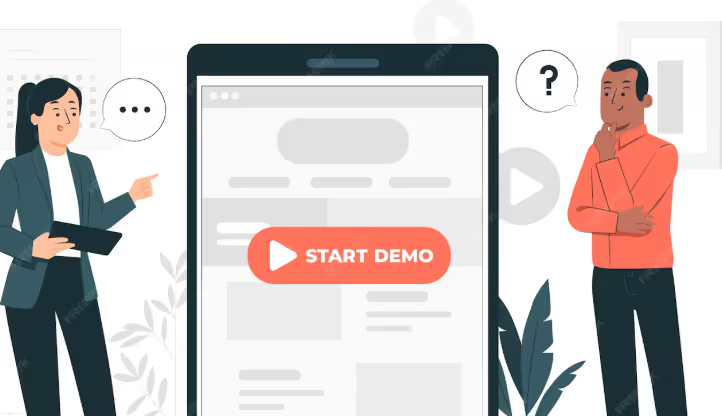
A demo video is a guided walkthrough that shows your SaaS product in action, not just features, but how someone actually uses it to solve real problems.
The objective is to show the product working in real workflows, so prospects can see themselves using it and understand the value without a live call.
A strong demo video answers three questions:
- What can the product do in real use cases?
- How do users perform core tasks step by step?
- What outcomes should users expect when they follow this workflow?
In 2026, the best demo videos are role-based, outcome-focused, and visually clear. They do not overwhelm with every feature. They focus on the most important workflows that move the buyer from curious to interested in trying.
Example: Inflow CRM Demo: All-in-One SaaS Platform
Inflow CRM is a SaaS customer relationship management platform designed to bring sales, marketing, and customer support tools together in one interface. This demo video is published on their official YouTube channel to help prospects quickly understand how the core product works.
What’s Unique About This Demo Video:
Unlike generic feature rollouts or marketing teasers, the Inflow CRM demo:
- Walks through a real user workflow, guiding the viewer through a sales process step by step
- Shows real UI interactions, so you see the actual software screens instead of abstract diagrams
- Focuses on outcomes, not just clicks, but what happens when you complete each step in the process
Rather than showing every nook and cranny of the product, this demo stays laser-focused on what matters most to a buyer evaluating a CRM tool: how to manage leads, track pipelines, and move deals forward.
What Your SaaS Can Learn from This
1/ Show the product solving a real problem
Do not just demo features. Show the tool being used to complete the workflows your audience cares about, for example closing a deal, tracking a lead, or generating a report.
2/ Structure the demo around outcomes
Each step in your demo should answer, “What does this help the user accomplish?” not just “Where do I click next?”
3/ Use real UI footage
Seeing the actual interface builds confidence and reduces guesswork before a trial or live demo.
4/ Keep it focused
A focused demo that showcases key workflows performs far better than a long feature tour that tries to show everything.
In 2026, demo videos are not about showing every feature. They are about showing how your product works in real life, helping buyers move from curiosity to confidence. When prospects can visualize themselves using your SaaS successfully, they are far more likely to start a trial, book a demo, or convert.
By now, one thing should be obvious.
The best companies are not trying to impress viewers with production quality or clever scripts. They are focused on one thing: helping buyers and users understand the product faster and with less friction.
Explainer videos clarify positioning.
Onboarding videos reduce confusion.
Demo videos build confidence.
Feature updates keep users engaged.
Each video has a purpose. And when purpose is clearly defined, video stops being “content” and starts becoming a growth asset.
If your SaaS relies on a single homepage video or a random YouTube upload, you are leaving trust, retention, and revenue on the table.
If you want to build a repeatable SaaS video system that attracts the right users, helps them win early, and supports your sales team, that’s exactly what we do at Komet Media.
Book a demo call or request a free sample video.
We will show you how your SaaS should actually be using video in 2026.