
🪄 AI Summary
Heading 1
Heading 2
Heading 3
Heading 4
Heading 5
Heading 6
Lorem ipsum dolor sit amet, consectetur adipiscing elit, sed do eiusmod tempor incididunt ut labore et dolore magna aliqua. Ut enim ad minim veniam, quis nostrud exercitation ullamco laboris nisi ut aliquip ex ea commodo consequat. Duis aute irure dolor in reprehenderit in voluptate velit esse cillum dolore eu fugiat nulla pariatur.
Block quote
Ordered list
- Item 1
- Item 2
- Item 3
Unordered list
- Item A
- Item B
- Item C
Bold text
Emphasis
Superscript
Subscript
Most B2B teams ask the wrong question. It's not "should we do organic vs paid video distribution for B2B?" It's "which one does what, when?" Organic builds the trust and credibility that closes deals six months from now. Paid accelerates reach to the accounts you need in the pipeline today. Both have a role. What kills teams is defaulting to one without a strategy for the other. This guide breaks down exactly how each channel works, what the data says, and how to combine them into a system that actually moves buyers.
TL;DR
- Organic video builds compounding trust and pipeline over time; paid video drives targeted, immediate reach to specific accounts.
- LinkedIn is B2B's #1 video channel for both organic and paid distribution in 2026.
- Short-form video (30–60 seconds) delivers the highest ROI across both distribution types.
- The strongest B2B teams use paid to amplify organic content that already performs, not to replace it.
What Is Organic vs Paid Video Distribution for B2B, and Why Does It Matter?
Organic vs paid video distribution for B2B is one of the most consequential decisions a growth team makes, yet most teams treat it as a budget conversation when it's really a strategy conversation.
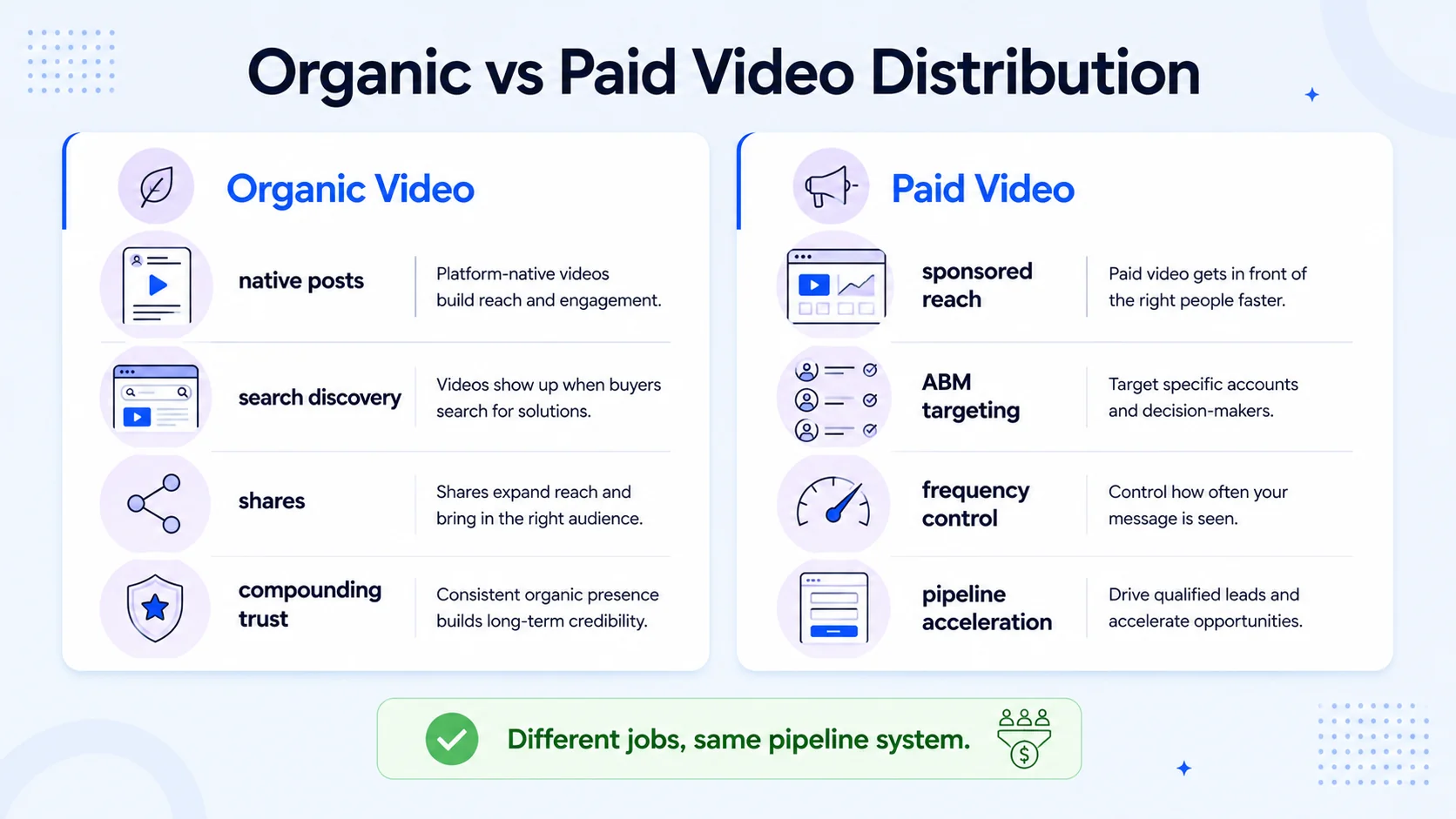
Organic video distribution means publishing video natively on platforms (LinkedIn, YouTube, your website, podcast channels) with no ad spend behind it. The video earns reach through algorithmic promotion, shares, search, and the strength of your network. It includes LinkedIn native posts, YouTube uploads, embedded Wistia or Vidyard video on landing pages, and repurposed podcast or webinar clips.
Paid video distribution means using budget to guarantee reach: LinkedIn Sponsored Content, YouTube Ads via Google Video Campaigns, programmatic advertising through demand-side platforms, and paid retargeting. You define the audience, control the frequency, and pay for the impression or click. Why does this distinction matter for B2B specifically? Because the B2B buyer journey is long, non-linear, and driven by trust.
The 2025 Edelman x LinkedIn Thought Leadership Impact Report found that 55% of decision-makers use thought leadership as part of their vetting process. That vetting happens across weeks of organic content consumption before a buyer ever responds to a paid ad. At the same time, organic reach alone cannot guarantee that your content reaches the right 50 accounts in your ICP at the right moment. That's where paid precision matters.
73% of B2B buyers say video is their preferred way to learn about a product or solution, and 65% of executives visit a vendor website after viewing their video. Whether those views happen through organic discovery or paid placement changes the cost, the timing, and the quality of the intent signal, but the format is equally critical either way. The practical upshot: organic and paid are not competitors. They're different instruments in the same pipeline orchestra. Understanding each on its own terms is the prerequisite to using them together effectively.
How Organic Video Distribution Works for B2B Companies
Organic video distribution in B2B is fundamentally a compounding trust system. Each piece of content you publish builds on the last, strengthening algorithmic authority, search visibility, and audience recognition over time.
Here's how it works in practice:
- Create platform-native video: Film a founder insight, repurpose a webinar clip, or cut a product walkthrough into a 60-second LinkedIn post. Native video consistently outperforms link posts on every major B2B platform.
- Publish consistently to owned channels: LinkedIn, YouTube, and your website (via Wistia or Vidyard) are the core distribution surfaces. Each platform serves a different stage of the B2B buyer journey.
- Optimize for search and discovery: YouTube functions as a search engine. Titles, descriptions, and tags drive organic discovery from buyers actively researching solutions. Pages with embedded video are 53x more likely to rank on the first page of Google.
- Repurpose to amplify reach: One webinar becomes five LinkedIn clips, a podcast becomes a YouTube Short, a demo becomes a sales enablement asset. This is where content repurposing creates compounding returns without proportional cost.
- Track engagement as a buying signal: Views, comments, and shares on organic video inside tools like Vidyard and HubSpot create Marketing Qualified Lead signals that feed into account-based marketing workflows.
According to Wistia's 2026 State of Video Report, LinkedIn is now B2B's #1 video channel, with 8 in 10 teams naming it their primary place to share videos, it even beats out YouTube. LinkedIn video watch time increased 36% year over year, and video uploads grew 20% in Q4 2025. Despite some reports of declining organic reach, total video consumption on the platform continues to rise.
The organic model rewards patience and consistency. It does not reward one-off posts. The teams winning on organic in 2026 treat video distribution like a publishing operation: systematic, repurposed, and built around documented buyer questions rather than internal announcements.
Organic video's compounding advantage: a post from six months ago still earns views, builds search equity, and surfaces in LinkedIn feeds long after you've moved on to the next campaign. For B2B SaaS and funded tech teams specifically, organic video is where founder-led growth, thought leadership, and product education converge into a trust-building engine that no paid campaign can replicate at the same cost.
Best Organic Video Distribution Strategies for B2B in 2026
The platforms are known. The question is how to use them with precision. Here are the highest-leverage organic distribution strategies for B2B teams this year:
LinkedIn native video (short-form, founder-led): 41% of B2B marketers say short-form video drives the highest ROI of all video formats, per the LinkedIn B2B Marketing Benchmark 2025. Founders and executives posting 30–90 second clips consistently outperform brand page content because the algorithm and the audience both prefer authentic, personal voices.
YouTube for search-driven buyer education: YouTube sits at the intersection of organic search and video. Explainer videos, product walkthroughs, and comparison content rank in Google and YouTube search results simultaneously. Video boosts engagement and leads to up to a 157% increase in organic traffic from search engines.
Wistia and Vidyard on key pages: Embedding video on product pages, case study pages, and pricing pages converts passive readers into engaged prospects. Research shows that adding video to landing pages improves conversion rates by 80–86%.
Gated content via on-demand webinars: On-demand webinars keep getting plays for up to 12 months after the live event, making them one of the highest-ROI formats for sustained organic lead generation.
Podcast and webinar repurposing: Every long-form recording is a content mine. A 45-minute podcast episode or webinar yields 8–12 short clips, a LinkedIn post series, and a YouTube upload, without additional recording time.
The consistent thread: repurpose everything, distribute natively, and measure engagement as a buying signal rather than a vanity metric.
Is Paid Video Distribution Worth It for B2B Lead Generation?
The short answer is yes, with a clear-eyed understanding of what it does well and where it breaks down. Organic vs paid video distribution for B2B breaks down most clearly at the speed vs. scale question. Organic takes time to compound. Paid delivers controlled reach immediately. For teams with pipeline targets and a defined ICP, paid video distribution is a critical demand generation lever.
Here's what the numbers show for LinkedIn Sponsored Content, the dominant paid video channel for B2B: FirstPageSage data reveals that after 3 years, LinkedIn delivers 192% ROI for paid social and 229% ROI for organic social. Organic wins over the long arc, but paid delivers meaningful returns while organic is still compounding. Expect $40–$150 CPL for most B2B campaigns using video-to-lead-form combinations on LinkedIn, with premium targeting and competitive industries pushing costs higher.
LinkedIn Lead Gen Forms typically convert at 6–10% once users interact, which is strong for B2B paid channels. For video advertising specifically, the combination of a short awareness video followed by a retargeting campaign to warm viewers is the highest-performing paid structure for SaaS teams.
Where paid breaks down:
- Cold audiences with no prior brand exposure produce high CPLs and low-quality leads. Paid works best after organic has established some baseline awareness.
- Without marketing attribution, it's hard to know which video drove which pipeline. HubSpot and Vidyard integrations are non-negotiable for closing this gap.
- Cost Per Acquisition on Google Video Campaigns tends to run high for B2B unless tightly combined with remarketing lists.
The paid video is a gas pedal, not an engine. If your organic content isn't converting, pumping budget into paid distribution accelerates nothing. For Account-Based Marketing use cases, paid video is particularly powerful: LinkedIn Sponsored Content lets you target specific company lists with your video, ensuring that your exact ICP sees your demo walkthrough or case study before a sales touchpoint. Account-based marketing campaigns on LinkedIn deliver 200% better ROI than standard broad-audience campaigns.
What Platforms Work Best for Organic and Paid B2B Video Distribution?
Platform choice is where organic vs paid video distribution for B2B becomes very concrete. The right platform depends on the distribution type, the funnel stage, and the audience behavior.
LinkedIn is the clear anchor for most B2B teams. 81% of B2B teams share video on LinkedIn, making it the top B2B distribution channel; according to Wistia's State of Video Report, LinkedIn has overtaken YouTube as the primary video channel for B2B marketing teams for the first time.
YouTube supports both organic SEO discovery and paid Google Video Campaigns. For YouTube video editing and long-form thought leadership, it remains essential.
Vidyard and Wistia sit behind the scenes on your site and inside sales sequences, where gated content and video email integrations feed directly into CRM pipelines. Both integrate natively with HubSpot and Salesforce, closing the marketing attribution loop between video views and revenue.
Programmatic advertising broadens reach beyond walled gardens but requires strong creative and careful audience segmentation. It performs best for brand lift campaigns supporting LinkedIn and YouTube retargeting, not standalone lead generation.
For short-form video editing, the key is building platform-specific versions of each asset rather than uploading the same file everywhere. 76% of teams adjust the aspect ratio depending on where they're posting, and half do it every time. Native formatting is no longer optional, it's baseline execution.
How to Build a B2B Video Distribution System That Uses Both
The most common mistake I see from B2B SaaS and funded tech teams: they treat organic and paid as separate strategies owned by different people. Organic goes to content. Paid goes to demand gen. They rarely talk. The result is neither channel performs as well as it should.
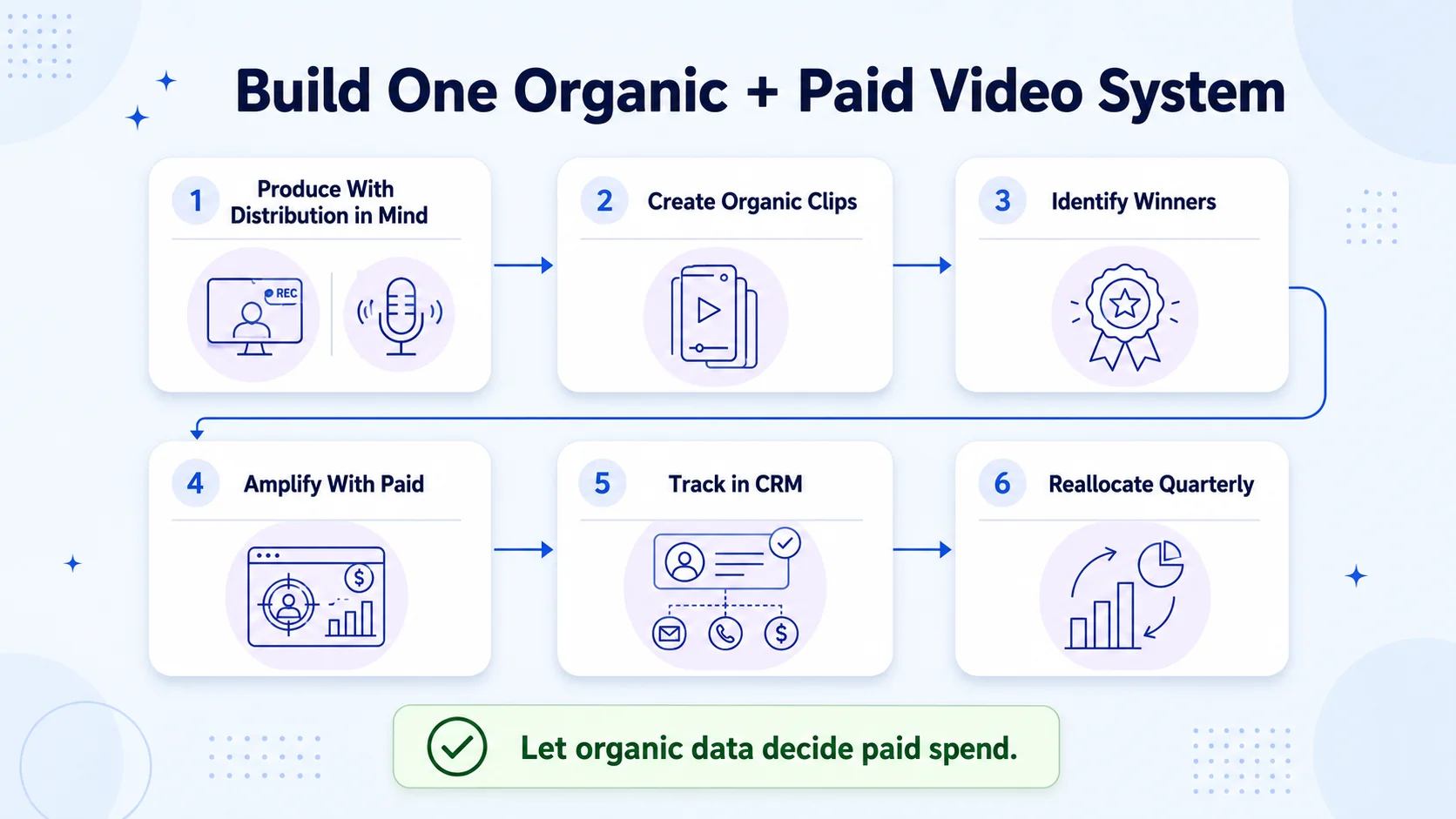
The fix is building one integrated distribution system. Here's how:
- Produced with distribution in mind: Every long-form recording (demo, webinar, podcast) is built to yield both organic clips and paid creative. One shoot, two distribution paths. Our video marketing services are built around this exact model.
- Let organic data tell you what to put budget behind: When an organic LinkedIn post or YouTube video earns strong engagement, that's a validated creative signal. Promote it with LinkedIn Sponsored Content. Don't guess, amplify what already works.
- Use paid for precision, organic for compounding: Paid LinkedIn targets your ABM account list. Organic LinkedIn builds the ambient credibility that makes those paid impressions convert. They operate in parallel, not in sequence.
- Close the attribution loop with your CRM: HubSpot's video integrations (via Vidyard or Wistia) track which contacts watched which video and for how long. That data feeds lead scoring, sales alerts, and pipeline reporting. Without it, you're flying blind on both channels.
- Set channel-specific KPIs: Organic video = watch time, organic reach, profile visits, inbound DMs, SEO traffic. Paid video = CPL, Cost Per Acquisition, demo request rate, pipeline influenced.
- Review and reallocate quarterly: Use SEMrush or native platform analytics to audit which organic content drives the most pipeline assist, and shift paid budget toward amplifying those assets.
85% of video marketers say video has helped generate leads, per Wyzowl 2026. The strongest performers use gated video content, in-video CTAs, and video-driven landing pages to capture contact information at the point of highest engagement.
The integrated system is what separates teams that treat video as a content deliverable from teams that treat it as a sales funnel asset. If you want to see how we build this for B2B teams, our services page walks through the full approach.
Conclusion
Organic vs paid video distribution for B2B is not an either/or choice in 2026, it's a sequencing and resource allocation decision.
- Organic builds compounding trust, search equity, and thought leadership that paid cannot replicate at the same cost.
- Paid delivers precision reach, ABM targeting, and pipeline acceleration that organic cannot guarantee.
- LinkedIn is the primary battlefield for both, with YouTube as the essential secondary channel.
- The winning move is one integrated system: produce once, distribute across both channels, let organic data direct paid investment, and close the loop with attribution tools.
If your team is sitting on recorded demos, webinars, and podcasts that haven't been repurposed into distribution assets, that's where the opportunity is right now.
Frequently Asked Questions
Q1: Can a B2B company grow with only organic video distribution?
Yes, but with significant caveats. Organic video can drive genuine pipeline through consistent LinkedIn posting, YouTube SEO, and content repurposing, but it compounds slowly. Teams with limited runway or tight pipeline targets will almost always benefit from pairing even a modest paid budget with their organic output to accelerate results.
Q2: How much should B2B companies spend on paid video distribution?
There's no universal number. For LinkedIn Sponsored Content, most B2B SaaS teams start with $3,000–$10,000 per month per campaign objective. Expect a CPL of $40–$150 for video-to-lead-form combinations, so your budget should be sized to generate enough lead volume to be statistically meaningful for your sales cycle length.
Q3: What's the difference between organic and paid video reach for B2B audiences?
Organic reach is earned through algorithm favor, network shares, and SEO, it's unpredictable but compounding. Paid reach is purchased and precise, you define exactly who sees your content. Organic tends to attract in-network, warm audiences. Paid reaches cold, targeted accounts outside your existing network.
Q4: Which video formats work best for organic B2B distribution in 2026?
Short-form clips (30–90 seconds), founder commentary, product walkthroughs, and repurposed webinar highlights consistently perform best. 71% of marketers consider videos between 30 and 60 seconds the most effective length. On-demand webinars work exceptionally well for gated organic lead generation.
Q5: How do I measure the ROI of organic video versus paid video?
Organic video ROI is tracked via watch time, SEO traffic growth, lead form completions from video-driven pages, and pipeline assist data from HubSpot or Vidyard. Paid video ROI is tracked via CPL, Cost Per Acquisition, pipeline influenced, and closed-won attribution. Both require CRM integration to connect video engagement to actual revenue.
Q6: Does organic vs paid video distribution for B2B differ by company stage?
Yes. Early-stage companies with limited brand recognition often need paid to build initial ICP awareness while organic content is being established. Growth-stage companies typically shift more weight toward organic as their founder brand and content library compounds. At scale, the two channels run in parallel as complementary budget lines, not competing priorities.