
🪄 AI Summary
Heading 1
Heading 2
Heading 3
Heading 4
Heading 5
Heading 6
Lorem ipsum dolor sit amet, consectetur adipiscing elit, sed do eiusmod tempor incididunt ut labore et dolore magna aliqua. Ut enim ad minim veniam, quis nostrud exercitation ullamco laboris nisi ut aliquip ex ea commodo consequat. Duis aute irure dolor in reprehenderit in voluptate velit esse cillum dolore eu fugiat nulla pariatur.
Block quote
Ordered list
- Item 1
- Item 2
- Item 3
Unordered list
- Item A
- Item B
- Item C
Bold text
Emphasis
Superscript
Subscript
If you are a B2B founder or marketer building real companies in 2026 and you are not on YouTube, you are invisible to the next generation of buyers. Not because YouTube is trendy. But because YouTube has quietly become the 2nd largest B2B research engine in the world.
Decision-makers don’t just Google anymore. They search, compare, validate, and evaluate through videos.
YouTube is no longer an entertainment platform. It is your pre-sales team, authority engine, category-building tool and most importantly your inbound lead magnet. And if you build it correctly, it compounds.
YouTube In 2026 Is A Decision Making Platform
In 2026, YouTube is not just a social media channel for founders, marketers, and creators. It has evolved into a decision making platform, especially in B2B. If you are building a SaaS product, running an agency, consulting, or creating educational content for professionals, your audience is not casually scrolling. They are researching. They are validating ideas. They are comparing perspectives. And before they ever book a call with you or send a DM, they are watching your videos.
They consume multiple videos, analyze different viewpoints, and look for clarity before they commit to buying anything. This is where your YouTube presence becomes powerful. Not because it is content, but because it shapes how people think of you before they interact with you or your company and product directly.
For founders and marketers building personal brands, this changes everything. The platform is no longer rewarding surface level virality. It rewards clarity. If your video helps a SaaS founder rethink pricing, or helps a marketer understand attribution better, or make buyers understand how he/she can help solve the problem, YouTube identifies viewers with similar behavior patterns and shows your content to them. The algorithm is essentially matching expertise with intent.
When you consistently publish thoughtful, retention focused content, the platform begins working with you, not against you. Over time, it turns into a self optimizing distribution engine that attracts the exact audience you want to serve.
Founder-Market Fit Before Product-Market Fit
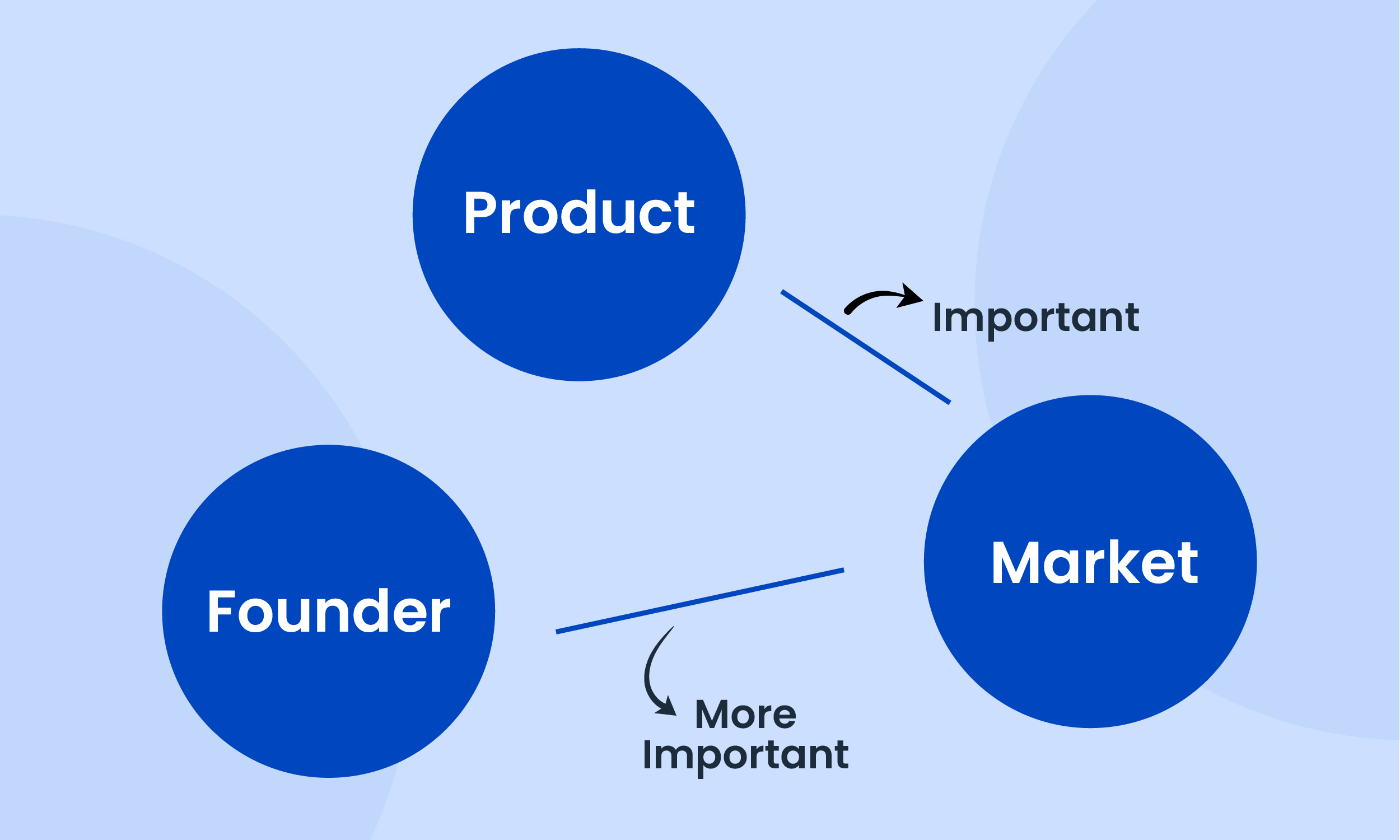
B2B founders fail on YouTube for one simple reason. They treat it like an advertising channel. They try to promote features, announce updates, and push demos. The platform quietly resists that approach. YouTube does not reward promotion. It rewards perspective.
Before you think about thumbnails, scripts, or posting frequency, there is a more important question to answer. What do you want to be known for in the next three years? Not your product. Not your startup name. Not your funding round. You're thinking. Because on YouTube, people subscribe to minds, not metrics.
This is where founder market fit becomes more important than product market fit, at least in the content world.
What is Founder-Market Fit?
Founder market fit means your ideas, experiences, and worldview align with a specific audience that wants to think better. When that alignment is strong, growth compounds naturally. When it is unclear, content feels forced and inconsistent.
If YouTube influences decisions, then what matters most is not your product only, it’s how your thinking is positioned.
In B2B, there are four dominant positioning models that consistently work for creators.
1/ Category Educator - This founder chooses to own the problem space instead of pushing the solution. They teach the fundamentals, clarify misconceptions, and define terminology. Over time, the audience begins associating them with clarity in that category.
2/ Builder in Public - This approach focuses on transparency. Revenue decisions, hiring mistakes, product pivots, go to market experiments. Instead of presenting perfection, the founder shares the process. This builds relatability and long term trust.
3/ Strategic Analyst - This creator dissects trends, markets, competitors, and industry shifts. They are less emotional and more analytical. Their audience watches to understand what is happening and what it means for their business.
4/ Contrarian Thinker - This founder challenges widely accepted assumptions. They question best practices, poke holes in common advice, and offer alternative frameworks. This positioning often drives strong engagement because it sparks thought and discussion.
Once your positioning is clear, your content must consistently reinforce it.
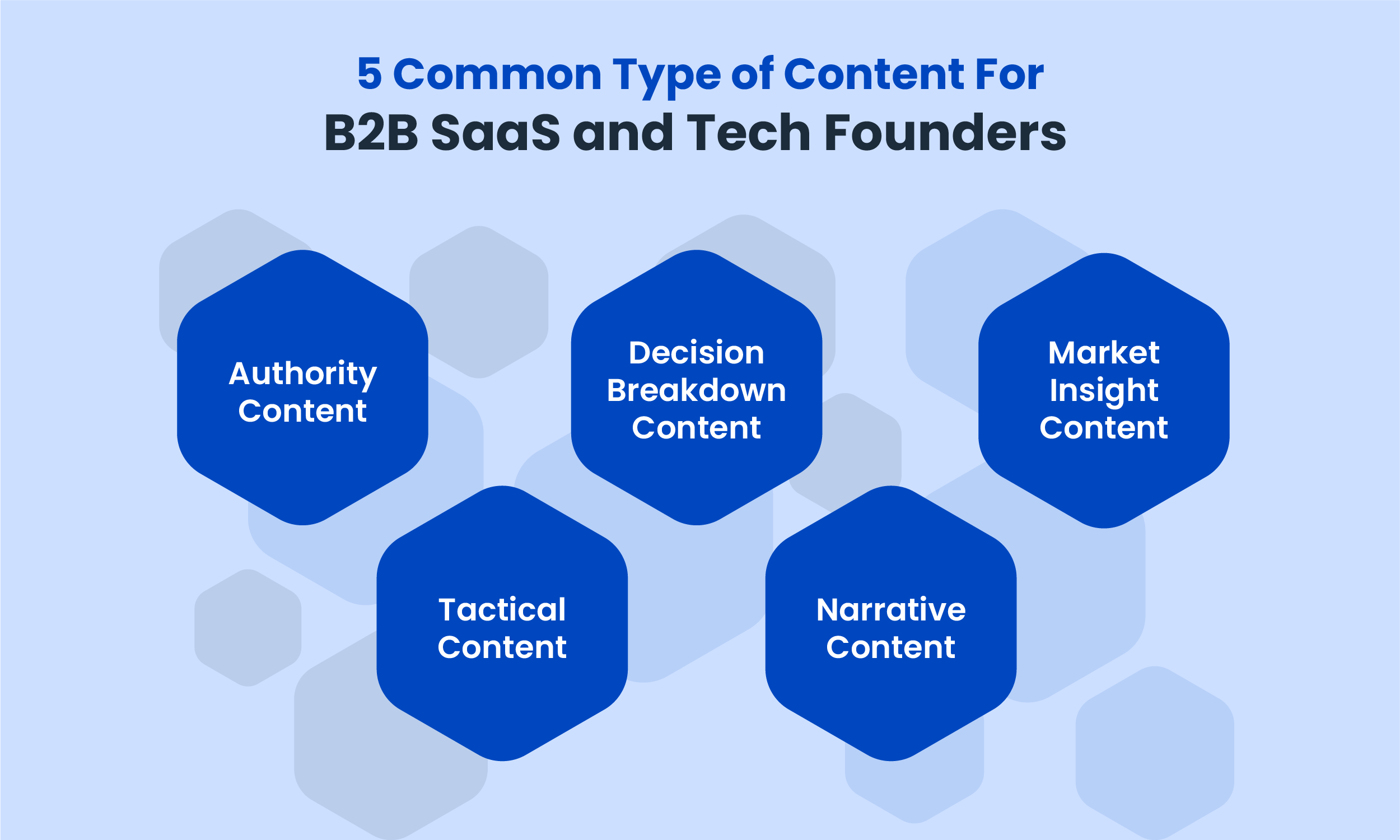
5 Common Type of Content For B2B SaaS and Tech Founders
For founders and marketers creating content on YouTube, this distinction is critical. If you try to lead with a product, growth will feel slow and transactional. If you lead with perspective, you build intellectual equity. Over time, your channel becomes your intellectual real estate. Every video is a digital asset that reinforces what you stand for and how you think.
In 2026, the founders who win on YouTube will not be the loudest promoters. They will be the clearest thinkers providing clear solutions to the complex problems.
Your content should feel like insight someone would expect from a Harvard Business School lecture, but delivered in a practical, modern format. That means frameworks, real reasoning, strategic breakdowns, and lived experience. Not motivational noise.
There are five strategic content categories that consistently build authority, trust, and long term leverage.
A) Authority Content - This is trust building at scale. These are videos that tackle uncomfortable but important questions such as why most SaaS startups fail at Series A, the real reason customer acquisition cost is rising, or what nobody tells you about enterprise sales. Content like this signals depth of thinking. It positions you as someone who understands systems, not just tactics. Authority content builds credibility before a prospect ever speaks to you.
B) Decision Breakdown Content - This is high trust content because it reveals how you think under pressure. Instead of generic advice, you explain why you changed your pricing model, why you killed a feature that took months to build, or why you hired a Chief Revenue Officer before scaling paid acquisition. These videos show judgment. They allow your audience to borrow your decision making framework. In B2B, judgment is more valuable than tips.
C) Market Insight Content - This is high leverage because it connects your thinking to macro shifts. For example, analyzing the impact of AI on B2B SaaS, discussing market shifts in 2026, or evaluating the future of product led growth versus sales led models. This type of content attracts ambitious founders and senior operators who want to understand what is coming next. When you consistently interpret the market, you become associated with foresight.
D) Tactical Content - This is search driven and intent based. It includes topics such as how to reduce churn in SaaS, how to structure a high converting B2B demo, or how to build an outbound system that actually generates meetings. Tactical content captures active demand. These viewers are already looking for solutions. If your video helps them execute better, you earn practical trust.
E) Narrative Content - This is retention driven and often underestimated in B2B. Stories outperform lectures because they activate emotion and curiosity. A title like “Last year, we almost ran out of runway” creates immediate tension. It invites the viewer into a real experience. Compare that to “Five tips for SaaS growth." The story wins because it promises insight through lived reality, not abstract advice.
In 2026, the founders who win on YouTube will not be those who post frequently without structure. They will be those who treat their channel like intellectual property. Strategic categories create consistency. Consistency builds positioning. Positioning builds demand.
When your content educates at a high level, breaks down real decisions, interprets the market, solves tactical problems, and tells honest stories, you are no longer just creating videos. You are building a public knowledge base that compounds trust over time.
Implement SEO for Your YouTube Channel

In 2026, YouTube operates as two engines at the same time. It is a search engine and a recommendation engine. If you are a B2B founder, marketer, or SaaS creator, understanding this dual nature changes how you approach growth.
For B2B on YouTube, search matters more than going viral.
Your audience is not browsing casually. They are looking for answers, solutions to their problems. They type specific queries such as “how to reduce SaaS churn in B2B” or “how to structure enterprise sales compensation.” These are not entertainment searches. They are intent driven.
That is where long tail keywords become powerful. Instead of broad titles like “SaaS Growth Tips,” use problem aware phrasing. Speak directly to what someone is already trying to solve. The more specific the problem, the higher the intent behind the click.
Your titles should prioritize clarity. A viewer should immediately understand what they will gain. Your thumbnail, however, should intrigue the audience to watch the video. The title answers what the video is about. The thumbnail creates curiosity about why they should watch now.
When you combine intent driven keywords with curiosity driven visuals, you create a system that works for both search discovery and algorithmic recommendation.
In B2B, sustainable growth comes from discoverability around real problems, not from chasing trends.
Aim to Generate Leads (Not Just Views)

Most creators chase views. They optimize for clicks and vanity metrics. Smart B2B founders aim to generate leads. . Instead of asking viewers to “book a demo” immediately, offer something valuable that bridges the gap.
Free templates.
Framework PDFs.
Private newsletters.
Webinar invites.
Detailed case study downloads.
For example,“I’ve put together the exact churn dashboard we use internally. The link is below.”
That shifts the dynamic. You are giving before asking.
Creators like Ali Abdaal mastered this model. He built an ecosystem around free educational content, captured emails through valuable resources, and then nurtured that audience into courses and products that drove revenue.
When your content is optimized for search intent and connected to a thoughtful conversion pathway, you stop chasing views.
Long Form Builds Trust and Shorts Drive Reach in 2026
In 2026, YouTube is not just a content platform. It is a business engine. But only if you understand how different formats play different roles.
Long form videos are where real authority is built. When someone watches you for 15 or 30 minutes explaining a problem deeply, breaking down strategy, sharing experience, they start seeing you as a serious thinker. Long form ranks in search. It shows up when someone types a specific business problem. And more importantly, it builds trust. Trust does not come from quick clips. It comes from depth.
Short form is different. Shorts are not for deep thinking. They are for attention. They help new people discover you. A short clip can reach thousands who have never heard your name before. It creates awareness. It sparks curiosity. It makes someone think, “This person makes sense.”
But shorts alone do not build authority. And long form alone does not create enough discovery. That is why both must work together.
Shorts bring strangers into your world.
Long form makes them stay and think.
Then email, DMs, strategy calls, and conversations are what actually close business.
For you, YouTube should not be about going viral. It is about building a system where attention turns into trust, and trust turns into revenue.
Weekly Publishing Rule You Should Follow
- 1 Long-Form (8–20 min)
- 2–3 Shorts (30–60 sec)
- 1 Optional Personal/Founder video (can alternate long or short)
Consistency matters more than quantity content.
The 12-Month B2B YouTube Execution Plan As Per B2B Buyer’s Journey
(With Long vs Short Form Videos Segregation)
If You Follow This for 12 Months
You will have:
- 50+ long form authority videos
- 120–150 shorts
- Full buyer journey coverage
- Search presence
- Recommendation presence
- Trust built at every stage
And most importantly, your YouTube channel won’t look just like another creator channel, it will look like a B2B decision engine.
Freebie - YouTube Scripts Formula for Retention
Founders write like they are publishing whitepapers. Structured. Safe. Informational. But YouTube is not a PDF platform. Viewers do not process content like analysts reading a report. They think emotionally first. Logic comes later to justify staying.
If you understand this shift, your scripts immediately become stronger.
Here is one of the retention frameworks you can use:
Step 1: The Hook
The opening is not an introduction. It is a tension device.
Most founders open with context. That is the fastest way to lose attention.
A BAD hook sounds like this:
“Today I’ll talk about SaaS retention.”
There is no emotional pull. No stakes. No reason to care.
A GOOD hook sounds like this:
“Last year, we were losing 22 percent of our customers every quarter and I didn’t know why.”
Now there is uncertainty. There is tension. There is a problem that demands resolution.
Tension creates curiosity. Curiosity increases retention.
If the first 3 to 5 seconds do not create a gap between what the viewer knows and what they want to know, they will leave.
Step 2: The Open Loop
After creating tension, do not resolve it immediately.
Instead, promise clarity and delay resolution.
For example:
“By the end of this video, you’ll understand the one metric that changed our churn overnight.”
This creates anticipation. The brain wants closure. When you intentionally structure your content so the full answer unfolds gradually, viewers stay longer because they are waiting for the resolution.
Step 3: Pattern Interrupt Every 60 to 90 Seconds
Even high value educational content becomes boring if the delivery is flat.
Every 60 to 90 seconds, shift something.
Change your tone.
Ask a direct question.
Introduce a short story.
Move from theory to practical example.
Flip the perspective.
YouTube rewards rhythm. Attention drops when delivery feels linear and predictable. Small shifts reset focus and re-engage the viewer without needing dramatic edits.
Step 4: Provide Value Like a Paid Course
Instead of giving 5 tips, give insight, context, real example, or a Framework. This layered structure creates perceived depth. Depth builds authority. Authority increases watch time. When viewers feel they are getting premium level thinking for free, they stay longer and trust you more.
Step 5: Strategic CTA Placement (To Capture Leads)
Never wait until the final seconds to introduce a call to action. A significant percentage of viewers will not reach that point.
Mid video soft calls to action perform better, especially when they are identity based.
For example:
“If you’re a SaaS founder scaling past one million in ARR, follow along as I break down real decisions we’re making.”
This works because it speaks to a specific identity. It does not ask everyone to subscribe. It invites the right people to stay connected.
In 2026, writing YouTube scripts is not about sounding intelligent. It is about understanding attention psychology. Build tension. Open loops. Maintain rhythm. Deliver depth. Place intentional calls to action.
When you do this consistently with video content systems, your content stops feeling like a lecture and starts feeling like an experience people choose to stay for.
Ready to Build Your Video Content Systems?
If you are a B2B founder or SaaS leader reading this, here is the simple truth.
YouTube in 2026 is not about becoming an influencer. It is about becoming the most trusted voice in your category.
When done right, your channel becomes your pre-sales team. It builds authority before the first sales call. It answers objections before they are raised. It attracts buyers who already believe in how you think.
But most founders don’t fail because they lack intelligence. They fail because they lack a system.
At Komet Media, we help founders turn ideas into structured long-form authority content and high-leverage short-form distribution. Not random posting. Not trends. A clear content engine aligned to your buyer journey.
If you want YouTube to generate trust, leads, and long-term brand equity instead of just views, let’s build it properly.
If you are serious about turning YouTube into a real inbound engine instead of just a content experiment, Book A Demo Call now.
We’ll break down:
• Your positioning
• Your buyer journey gaps
• Your long-form + short-form strategy
• And how to turn content into qualified B2B leads
No generic advice. Just clarity on how to build your YouTube channel as a decision making engine.