
🪄 AI Summary
Heading 1
Heading 2
Heading 3
Heading 4
Heading 5
Heading 6
Lorem ipsum dolor sit amet, consectetur adipiscing elit, sed do eiusmod tempor incididunt ut labore et dolore magna aliqua. Ut enim ad minim veniam, quis nostrud exercitation ullamco laboris nisi ut aliquip ex ea commodo consequat. Duis aute irure dolor in reprehenderit in voluptate velit esse cillum dolore eu fugiat nulla pariatur.
Block quote
Ordered list
- Item 1
- Item 2
- Item 3
Unordered list
- Item A
- Item B
- Item C
Bold text
Emphasis
Superscript
Subscript
Most B2B companies are creating video content wrong.
They think the problem is production quality. Or posting frequency. Or finding the right platform.
It's not.
The real problem is they're creating content tactically instead of strategically.
They post because they feel like they should. Not because they know what each piece is supposed to do.
In 2026, the B2B buyers you want to reach are drowning in content. They scroll past 90% of it. The 10% that stops them? It's not the best produced. It's the most intentional.
Short form video is not about going viral. It's about building trust at scale. It's about showing up consistently with a point of view that makes someone think, "This person gets it."
Look at what's actually working. Apollo.io isn't posting cinematic ads. They're sharing cold calling tips in 60 seconds. Zendesk isn't explaining features. They're making you laugh about bad customer service nightmares you've lived through.
If you're a B2B founder or marketer, you don't need more content. You need better thinking about what each piece is supposed to accomplish.
Here are 10 short form video content ideas that actually work for B2B. Not because they're trendy. Because they're built around how buyers make decisions.
1. The Quick Tactical Tutorial
What It Is
You solve one specific problem in 60 to 90 seconds. No fluff. No lengthy intros. Just immediate value.
Apollo.io built an entire content strategy around this. They create short videos offering "right now" solutions to common sales challenges. Cold calling scripts. Email subject lines that get opened. How to get past gatekeepers.
Source: Apollo.io YouTube Channel
Why It Works in 2026
B2B buyers are overwhelmed by theory. They want actionable. They want something they can use today.
When you give someone a win, even a small one, you build trust. They didn't have to sit through a 40 minute webinar. They got value in the time it takes to drink their coffee.
That's how you stay top of mind. Every time they use your tactic and it works, they remember where they learned it.
How You Can Execute It
Pick one thing you do that delivers results. Break it into 3 to 5 clear steps.
Open with the problem. "Struggling to get responses on cold emails? Here's what we do."
Walk through the solution. Keep each step under 15 seconds.
Close with the outcome. "Do this and watch your reply rate double."
Record it on your phone. No fancy editing needed. Just clarity.
2. The Humorous Pain Point Skit
What It Is
You create a short, relatable video that dramatizes a common frustration your audience faces. You're not mocking them. You're acknowledging their reality with humor.
Zendesk does this masterfully. They produce short skits showcasing the "ugh but real" moments of bad customer service. The agent who can't find information. The endless hold music. The transfer to five different departments.
They never mention their product directly. But the implication is clear. This is the pain. We're the cure.
Source: Zendesk, YouTube
Why It Works in 2026
People buy from people who understand their problems. When you can make someone laugh about their pain, you're saying, "I've been there. I get it."
Humor also makes content shareable. A dry explainer video gets saved for later and forgotten. A funny one gets sent to colleagues with "This is literally us."
How You Can Execute It
Think about the most frustrating moment your ideal customer experiences. The thing that makes them want to throw their laptop.
Script a 30 to 60 second skit. Keep it simple. You don't need actors. Your team can do this.
Show the problem. Make it slightly exaggerated but still real. End with a knowing look at the camera or a caption that says, "There's a better way."
Post it. Watch the comments fill up with "Why is this so accurate?"
3. The Self-Aware Brand Moment
What It Is
You lean into something awkward, misunderstood, or imperfect about your brand and make it part of your content strategy.
Mailchimp's "Did You Mean" campaign is the gold standard here. People constantly mispronounced their name. Instead of ignoring it, they created an entire series around it. MailShrimp, JailBlimp. KaleLimp. FailChips.
They turned a pain point into a personality.
Source: FlairoxMedia, Youtube
Why It Works in 2026
Perfect is boring. Polished is forgettable. Self-awareness is magnetic.
When you acknowledge the thing everyone's thinking anyway, you control the narrative. You show you don't take yourself too seriously. That makes you human. That makes you memorable.
How You Can Execute It
Think about the awkward thing about your brand. Your name. Your origin story. A common misconception.
Create a series of short videos that playfully address it. Don't apologize. Lean in.
Mailchimp didn't say, "Actually, it's pronounced Mailchimp." They made MailShrimp merch.
That's the energy.
4. The User Generated Content
What It Is
You invite your customers to share their stories. How they use your product. What changed for them. What they built because of it.
Trello built an entire content engine around this. They asked users to share stories of how their tool changed their daily workflows. Then they turned those authentic testimonials into short form videos.
Source: Trello, YouTube
Why It Works in 2026
Nobody trusts what you say about yourself. They trust what your customers say.
User generated content is social proof at scale. It's not a case study written by your marketing team. It's a real person saying, "This actually worked for me."
And when you feature your customers, you're not just creating content. You're building community. People want to be featured. They share it. Their network sees it. That's distribution you can't buy.
How You Can Execute It
Ask your best customers for a video testimonial. Make it easy for them.
Send them three simple prompts: What problem were you trying to solve? What changed after you started using our product? What would you tell someone considering it?
They record on their phone. You add captions and your branding. Post it.
You just created a case study that feels real because it is.
5. The Behind the Scenes
What It Is
You show how things actually get done inside your business. Not the polished version. The real one.
This is the "day in the life" content that shows the messy middle. The Zoom calls. The whiteboard sessions. The moments when things don't go as planned and you figure it out anyway.
Why It Works in 2026
B2B buyers are tired of perfect. They want to know how you actually work before they hire you.
A behind the scenes video removes mystery. It builds confidence. When you show your process, you're not just marketing. You're educating. That's what separates vendors from partners.
Source: Lemlist, Linkedin
How You Can Execute It
Record a quick walkthrough of how you do one part of your work. Keep it real. Don't overproduce.
You could show how you onboard a client. How you run a strategy session. How you review a deliverable.
Let them see the work. Show the collaboration. Show the thinking behind decisions.
That's what builds trust.
6. Comparison Video
What It Is
You create a side by side comparison that clearly shows why your approach is different. Not better in every way. Different in the ways that matter.
Tryve does this effectively with their "Excel vs Monday.com" comparison video. They acknowledge what Excel does well (versatile, familiar, powerful for data), then clearly show where it falls short for project management. The contrast is educational and confident. Collaboration limitations. Manual timeline adjustments. Lack of automation.
They weren't subtle. That's the point. They wanted to control how people compared them before prospects even talked about alternatives.
Source: Tryve, YouTube
Why It Works in 2026
B2B buyers are comparing you to someone. You might as well control that narrative.
A comparison video positions you before they even talk to a competitor. You're framing the decision. You're highlighting the dimensions that favor your approach.
And when it's done with humor, it doesn't feel defensive. It feels confident.
How You Can Execute It
Pick your main competitor or the status quo approach people default to.
Create a simple "this vs that" format. Use two people, two columns, or split screen.
Highlight 3 to 5 key differences. Keep it factual but pointed.
End with a clear POV. "Here's what we believe matters more."
7. The Feature Walkthrough Video
What It Is
You demonstrate a specific feature or capability in action. Not just what it does. What it enables.
Shopify does this consistently. They create simple educational videos with voiceovers and actual product footage. They show new features in action and set clear expectations for what users gain.
Source: Shopify, YouTube
Why It Works in 2026
Most product videos are boring. They list features. They use jargon. They assume people already understand why it matters.
A good walkthrough connects the feature to the outcome. "Here's the button. Here's what happens when you click it. Here's what that unlocks for your business."
That's what makes someone think, "Oh, I could actually use this."
How You Can Execute It
Pick one feature. Record your screen showing exactly how it works.
Start with the problem. "If you're struggling to X, here's what we built."
Show the feature in action. Walk through it step by step. Keep the pace quick.
End with the outcome. "Now you can do Y in half the time."
Keep it under 90 seconds. Clarity over comprehensiveness.
8. Video With Stat Hook
What It Is
You lead with a surprising or counterintuitive statistic that immediately grabs attention. Then you unpack what it means and why it matters.
The stat is the hook. The insight is the value.
Zendesk does this effectively in their customer service video. They open with a hard-hitting stat: "More than 50% of consumers will switch to another business if they have a bad customer service experience." That stops the scroll.
Then they unpack what it means - every interaction shapes the customer journey, and bad experiences send people elsewhere. They close with actionable advice on how to check where customers are at.
Source: Zendesk, YouTube
Why It Works in 2026
Scrolling fatigue is real. You have two seconds to make someone stop.
A sharp stat does that. "73% of B2B buyers watch at least one video during their research process." Now you have their attention. Now you can teach.
Stats also position you as someone who's paying attention. You're not guessing. You're tracking patterns.
How You Can Execute It
Find a stat related to your space. Ideally something surprising or that challenges common assumptions.
Open with it. "Here's a number that will change how you think about X."
Then unpack it. What does it mean? What should someone do about it?
Keep the video under 60 seconds. The stat is the hook. The insight is the payoff.
9. The Bite Sized Expert Interview
What It Is
You interview someone with real expertise and break it into short, digestible clips. Each clip answers one specific question or unpacks one specific insight.
Wistia's "Brandwagon" series is a masterclass in this. They featured interviews with top marketers, breaking down complex industry trends into entertaining, educational, and binge worthy segments.
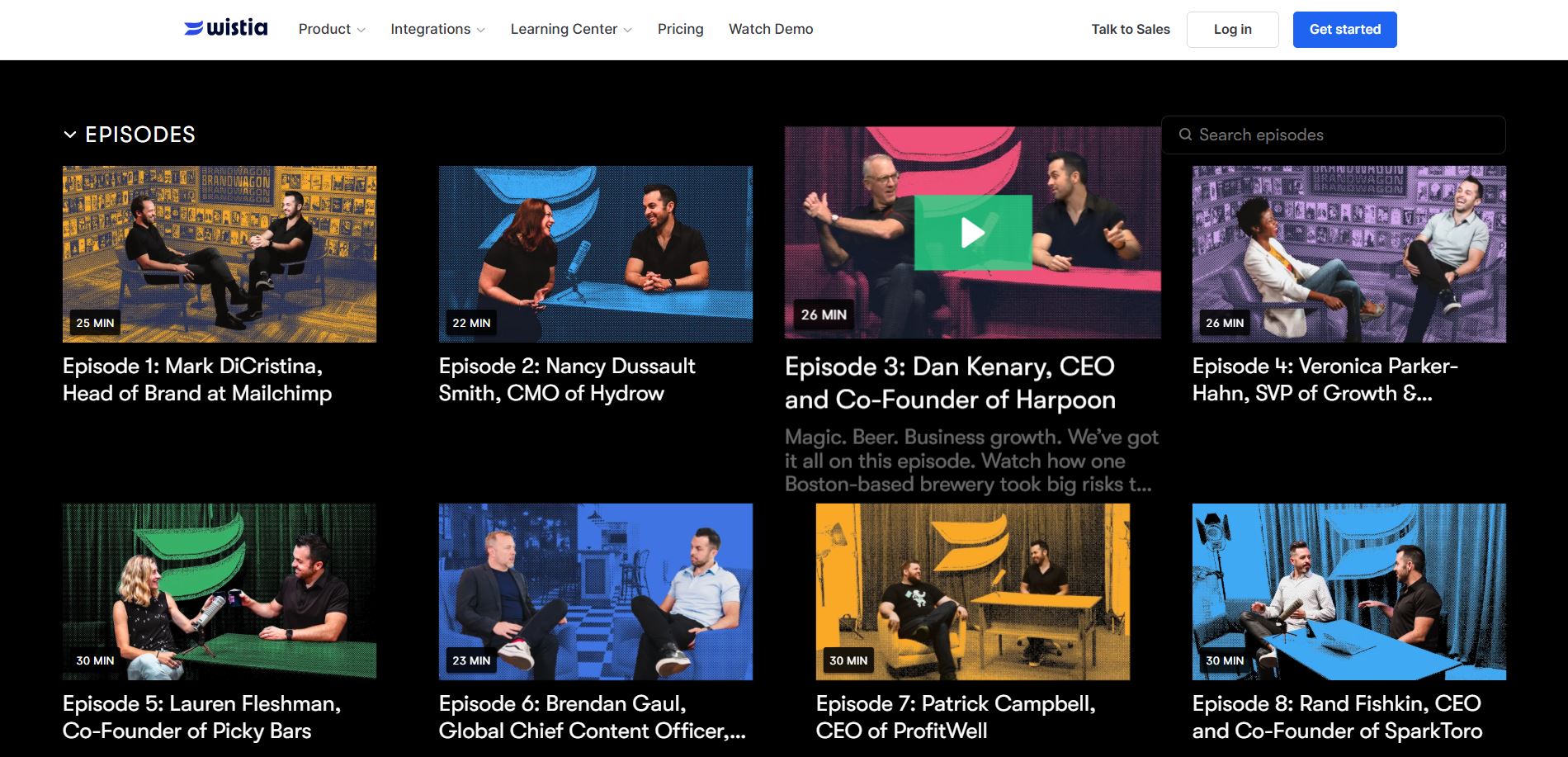
Why It Works in 2026
People want expert perspective without the time commitment. A 45 minute podcast is a big ask. A 90 second clip is frictionless.
Interview content also gives you built in credibility. You're not just saying something is true. You're featuring someone respected in the space who's saying it.
How You Can Execute It
Interview someone your audience respects. Record the full conversation.
Then break it into 60 to 90 second clips. Each clip should answer one question or deliver one insight.
Add captions. Post each clip as standalone content.
You just turned one hour of recording into 10 to 15 pieces of content.
10. Customer Success Story Video
What It Is
You tell a story about what your customer achieved. Not what your product does. What the person accomplished because of it.
Microsoft does this brilliantly. They focus on outcomes. A student building robots for nonprofits. An entrepreneur scaling a social enterprise. The technology is part of the story, but it's not the hero. The person is.
Source: Microsoft, YouTube
Why It Works in 2026
People don't buy software. They buy outcomes. They buy the version of themselves that solves the problem.
An emotional customer story shows them that version. It makes the outcome feel real. It makes it feel possible.
And when the story is about impact, not just revenue, it connects on a deeper level.
How You Can Execute It
Find a customer with a compelling outcome. Ideally something with emotional weight.
Interview them. Ask about the before. The turning point. The after.
Edit it into a 60 to 90 second story. Lead with the outcome. "Here's what they built."
Then show the journey. Keep it human. Keep it real.
End with where they are now. Let the transformation speak for itself.
Short form video is not about more content.
It's about better thinking.
Every piece you create should have a purpose. It should know what it's trying to do. Who it's for. What stage they're in.
The companies winning with video in 2026 are not the ones posting the most. They're the ones posting with intent.
Apollo teaches. Zendesk entertains. Mailchimp makes you remember. Trello lets customers speak. Shopify educates. Zoom differentiates. Wistia elevates. Microsoft inspires.
None of them are posting randomly. They all have systems. They repurpose strategically. They create once and distribute everywhere.
If you're building a B2B company, video is not optional anymore. But doing it wrong is worse than not doing it at all.
Start with one format from this list. Master it. Then add another.
Build the system. Then let the system run.
If you're rethinking how you approach video content and if you want to see what a done for you video content system looks like for your business, book a demo call. We'll send you a free sample clip in 48 hours so you can see the quality before committing to anything.